You shared your affiliate link. People clicked it. Your dashboard shows visits, and your commission report shows nothing.
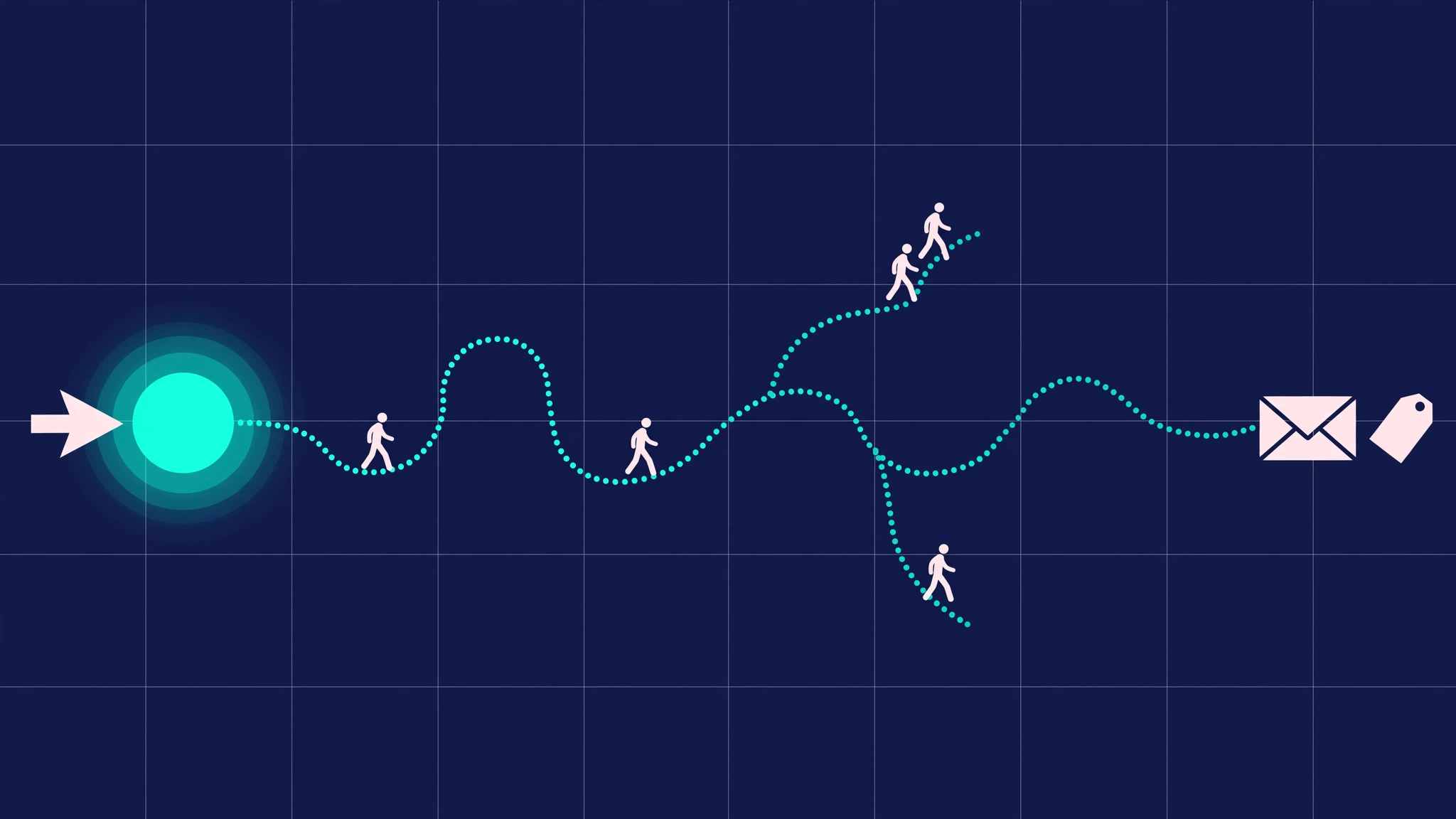
If you are seeing affiliate clicks but no sales, the instinct is to chase more traffic. Before you do, look at what the clicks are telling you. A click means someone was curious enough to tap a link. A sale means that person understood the offer, trusted the recommendation, believed the product fit their need, and finished a purchase. Many things happen between those two moments, and each one is a place to diagnose.
This guide walks through seven areas to check, in the order that usually saves the most time. Each section includes a beginner example and a question you can answer today.
Clicks and sales are different signals
A click measures interest in a link. A sale measures a decision. The gap between them is normal, because most people who click are researching, comparing, or simply curious. Even a well-matched offer will see many visitors leave without buying.
That makes the useful question "Where is the gap coming from?" rather than "How do I get more clicks?" More visitors passing through a leaky path give you more leaks, not more sales. Work through the checks below, fix the earliest problem you find, and then look again.
1. Traffic quality: are the right people clicking?
Traffic can be high in volume and low in fit. A post that earns clicks because of a curiosity-driven headline attracts people curious about the headline, not necessarily people who want the product.
Beginner example: You promote a beginner email-marketing course with a post titled "This one trick changed everything." Plenty of people click to find out what the trick is. Few of them were looking for an email course.
What to check:
- Who is the post written for? Can you describe that reader in one sentence?
- Does the headline or caption promise something the offer does not deliver?
- Do the comments and questions you receive come from people who need what you are recommending?
Content that answers a specific, real question tends to attract people who already have that problem. That is a better starting point than a broad hook.
2. Offer relevance: does the product match the need?
A good product can still be the wrong recommendation. Relevance means the product solves a problem your readers have said they have.
Beginner example: Your audience follows you for tips on starting a side project with no budget. You recommend a premium program aimed at established business owners. The product may be solid, but it answers a question your readers are not asking.
What to check:
- Which reader question does this product answer?
- Who is it built for, and who would not benefit from it?
- Would you be comfortable explaining to a reader why you chose it over alternatives?
If you cannot name the need, the recommendation is likely premature.
3. Buying intent: are visitors ready to buy, or still learning?
People arrive at different stages. Some are at the "what is this?" stage, some are comparing options, and some are ready to purchase. A visitor from a how-to post usually wants to learn. A visitor searching for a specific product name or "product X review" is closer to a decision.
Beginner example: A reader finds your post on "how to start affiliate marketing" and clicks straight through to a membership offer. They are still working out what affiliate marketing is. Asking them to buy now skips the steps they need first.
What to check:
- What question was the visitor trying to answer when they found your content?
- Does your content move them one step forward, or does it jump to a purchase?
- Would a free guide, a checklist, or a short email series suit this stage better than a sales page?
4. The vendor's sales page and offer details
As an affiliate, you control the recommendation. The vendor controls the page where the sale happens. Review it the way a first-time visitor would.
What to check:
- Price and terms: Is the cost clear? Are there recurring charges or paid upgrades? Surprises at checkout stop sales and damage trust in your recommendation.
- Clarity: Can you tell within a few seconds what the product is and who it is for?
- Mobile experience: Much social traffic arrives on phones. Open the page on yours. Does it load, read, and check out without friction?
- Checkout: Does the buy button work? Do the payment steps make sense?
If the page is confusing to you, it is confusing to your readers. Sometimes the best fix is a different offer with a clearer page.
5. Trust and message alignment
People buy from sources they trust, and trust drops when the message changes between your content and the destination. If your post says "a free way to get started" and the page shows a paid plan first, visitors feel misled and leave.
Beginner example: Your caption promises a simple beginner checklist. The link opens a long sales video with no checklist in sight. The visitor came for one thing and found another.
What to check:
- Does the promise in your post match what the visitor sees after the click?
- Have you said why you are recommending this product, in plain words?
- Have you disclosed the affiliate relationship clearly, close to the link?
Honest disclosure supports trust. A reader who knows you may earn a commission, and still sees a useful, accurate recommendation, has more reason to believe you.
6. Link and conversion tracking
Sometimes sales happen and go unrecorded, or the link never worked as intended. Tracking problems are less common than fit problems, but they are quick to rule out.
What to check:
- Test the link yourself. Open it in a private browser window and confirm it lands on the correct page.
- Check the details. Confirm your affiliate ID is in the URL and that no characters were lost when you pasted it into a post, bio, or message.
- Use tracking IDs where the network allows. ClickBank, for example, supports tracking IDs (TIDs) that can be added to a link, so you can see which post or platform produced a click. Check your network's documentation for how its reports work.
- Compare the numbers. Your link-click count and the network's hop or click report rarely match exactly, but they should be in the same range. A large gap suggests a broken redirect or an inaccurate counter.
Keep a simple note of which link went where. If every post uses the same link, you cannot tell which content is bringing interested readers and which is not.
7. What happens after the click, including follow-up
Most visitors do not buy on a first visit. They read, think it over, get interrupted, and leave. When a visitor leaves an affiliate offer page without buying, you usually have no way to reach them again, because the page belongs to the vendor.
That is where permission-based follow-up can help. Instead of sending every click straight to an offer, you can invite interested readers to join your email list first. In exchange, you give them something useful, such as a short guide, a checklist, or a series of answers to common beginner questions. Then you stay in touch with people who chose to hear from you.
Beginner example: A reader finds your post about getting clicks but no sales. They sign up for a short email series on diagnosing the problem. Over a few emails you answer their questions, explain how to match a product to a need, and, once it fits, mention an offer and disclose your link.
Email list building for affiliates takes longer than posting a link, and it does not guarantee sales. It gives you a way to answer questions, build familiarity, and recommend products at the point they are relevant. If you build a list, follow the rules for the places you publish and send email with clear consent.
Direct linking has its place too. If you review a specific product for people actively searching for it, or you recommend an item inside content that already answers the question, sending readers directly to the offer can make sense. The point is to choose on purpose. A list-first approach suits creators who want ongoing conversations with their audience. Direct links suit situations where the reader is ready to decide.
A quick diagnostic checklist
Work through these questions in order. The first "no" is your best starting point.
- Can I describe the person my content is written for in one sentence?
- Does my headline promise something the offer actually delivers?
- Does this product answer a question my readers have asked?
- Does my content match the visitor's stage, learning or ready to buy?
- Is the vendor's price, terms, and checkout clear on desktop and mobile?
- Does what I promised in the post match what appears after the click?
- Is my affiliate relationship disclosed clearly, close to the link?
- Have I tested the link in a private window and confirmed my tracking is in place?
- Do I have a way, with permission, to follow up with interested readers who are not ready yet?
Change one thing at a time and give it a fair period before judging the result. If you change the headline, the product, and the link all at once, you will not know which change mattered.
Optional: A list-first program to explore
If checks 3 and 7 describe your situation, with interested visitors who leave and no way to continue the conversation, a list-first approach may help. We cover the basic idea on the Affiliate Marketing Made Simple homepage: answer a real question, invite the reader to your email list, follow up with value, and share an offer that fits.
The ClickBank Profit Club is one program built around that model. According to the provider's join page, it offers a free entry option with no credit card required, a branded, hosted ClickBank funnel intended to collect leads into your own email list, and live coaching and support. These are the provider's statements, and the provider says results vary and are not guaranteed. Confirm current terms, any paid upgrades, and what is included at each level before you join.
Explore The ClickBank Profit Club
Disclosure: The site owner may earn a commission if you join through this link.
Prefer to start with free beginner notes first? You can sign up for occasional tips by email.
Frequently asked questions
Why am I getting affiliate clicks but no sales?
The most common reasons are a mismatch between the audience and the offer, visitors who are not ready to buy, confusing or misaligned sales pages, and missing follow-up. Tracking problems are possible but less common. Start with who is clicking and why, then check the page they land on.
How many clicks should I expect before a sale?
There is no reliable number. Conversion depends on the product, price, audience, and traffic source, and published averages vary widely. Instead of waiting for a target, track whether your visitors are the right people, whether they reach the offer page, and what you change over time.
Do I need an email list to make affiliate sales?
No. Some affiliates earn commissions through direct links, such as in product reviews or search-focused content. An email list is one option that lets you follow up with readers who are interested but not ready yet. It works best when you send useful, relevant messages to people who asked to receive them.
Is it okay to send people straight to an affiliate link?
Yes, when the reader is ready to evaluate that specific offer and you disclose your affiliate relationship. Direct linking can be a poor fit when readers are still learning or comparing, because you have no way to continue the conversation if they leave.
How do I know if my affiliate link is working?
Open it in a private browser window and confirm it reaches the right page with your affiliate ID intact. Then compare your own click counts with the network's reports. If you use tracking IDs, check that each one appears in your reporting.
Should I get more traffic or fix my conversion first?
Fix the earliest problem in the path first. If your audience, offer, or follow-up is weak, more visitors repeat the same result at a larger scale. Once the path works for a small group of readers, adding traffic makes more sense.
Where to go from here
Pick one check from this list and complete it today. Test your link, rewrite one headline so it matches the offer, or write a single email that answers a question your readers keep asking. Small, specific fixes show you where the gap is, and that is more useful than another round of posting.
